Sunday, March 22, 2009

HOW TO PREVENT EYE STRAIN

Hours of consistent hard study is the only recipe for achieving good grades in an exam. However, sitting at a desk or computer screen for hours on end can be stressful. The reason for eyestrain is that our eyes are designed to constantly shift their focus between objects that are near and objects that are far away. Eyestrain results when the eyes focus on a single close-up object for extended periods of time. Let us consider some practical steps to prevent eyestrain:
STEP 1: It is a fallacy that sitting in front of a wall improves concentration. The eyes must be able to relax for distant and near objects. Sit facing a corridor or even next to a window where you can relax your eyes by looking far. In case your room does not permit it, place a mirror above you.
STEP 2: Take a five-minute break after every 40 minutes of study as a regular routine of study. Get up and walk around the room for a while. The eyes get tired from being anchored in a fixed position for any prolonged period of time.
STEP 3: Schedule study sessions starting early morning rather than late night. The common concept is, ‘At night, I concentrate better’. For an exam, it’s not how much you read, but what you can remember and most important of all ‘reproduce’ on call. Studying in the daytime is better as you’ll study faster, with a far better reproducible memory than the same amount at night when fatigue causes loss of ability to concentrate.
STEP 4: Adjust the lighting. Though you want the area in your study to be well-lit, make sure it has enough ambient lighting. Studying in a dark room leads to eye-strain as the contrast between the lit and unlit areas is too much. Light coming from a lamp at your side and back is easier on the eyes.
STEP 5: When we concentrate hard, the blink rate of the eye drops significantly. This leads to dryness, blurring, and diffused vision. Blink frequently whenever you study for long periods at a time. Blinking helps to keep the eyes moist. Dry eyes lead to tired eyes. Using tear lubricants is a good idea.
STEP 6: If you need to work on the computer monitor, position your computer monitor or laptop so that you are not looking at the screen straight on. Your eyes are designed to work in a position of ‘depressed convergence’. The top of the screen should not be higher than your eyes. You should be viewing the screen at a slight downward angle.
STEP 7: The brightness of the screen should be the same intensity as the lighting in the room. Increase the font size for easier reading. If you experience a ‘flickering’ sensation from your computer screen, try lowering the screen’s brightness control or increase the ‘refresh’ rate. STEP 8: Cut down on large meals. It simply slows you down and loses concentration. Small meals, preferably non-oily, at regular short intervals is far better. Cut down on excess tea and coffee. It only gives temporary boost. Take your multi-vitamins regularly (shortage of Vit B1 leads to eyes tiring earlier and even slows the memory). If you end the day feeling tired, try incorporating some of these tactics into your schedule. You may be surprised what a difference such minor adjustments can make.
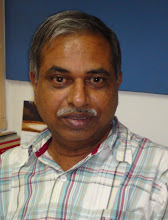
– DR KEIKI R MEHTA, ophthalmologist , TOI

Tuesday, January 20, 2009

INNER VOICE

Believing is seeing

On the inequalities observed in the way God fulfills the desires of people, Lord Krishna gives an explanation that the difference is not due to his partiality but through how people see him.There are believers and non-believers. Even among devotees, there are those who strongly believe in God and his system of justice, despite the most difficult situations: only their own faith carries them through. And there are believers who believe in God simply because they have been taught to believe.Non-believers however place a strong faith in themselves. Now this is very right since God is within each one of us. But since non-believers attribute every success to themselves and to nobody else, inevitably, the ego takes over. God seems to look after some people with special care because they really believe in God's ability to do so.
One version of a traditional story tells of the little boy who lived in a village and had to go to another village to attend school. To do so, he had to cross through a thick forest alone. His mother instructed him to return home before sunset and added, "In case you get delayed and if you lose your way in the jungle, call out for Krishna. He will surely come to you and guide you home." The child innocently concluded that "Krishna" lived in the forest. One day he kept playing and it was sunset when he started crossing the jungle. Terrified, he remembered his mother's words and called out to Krishna.
A shepherd boy emerged from the trees and playfully escorted him home. The child happily ran in and brought his mother out to meet his friend. But no one was to be seen. The child wondered where "Krishna", his friend who lived in the forest, had gone. On hearing this, the mother was dumbstruck. She knew no one lived in the forest and that any villager who happened to be in the woods would have returned. It was none but God who had brought her child home, drawn by his faith.

Tuesday, October 21, 2008

How to take care of your cough & cold


Drink warm fluids. Inhale warm mist. (Reason? Both relax the airway and loosen up the phlegm). Suck on cough drops or hard candy to coat the irritated throat. Drink plenty of liquids – about six to eight glasses of water daily. Avoid tobacco smoke. Smoking or being exposed to smoke makes the cough worse.


Some home remedies for your cough:

Grapes tone up the lungs and act as an expectorant, relieving a simple cold and cough in a couple of days. A cup of grape juice mixed with a teaspoon of honey, is advised for cough relief. Also, use onions. This vegetable should be chopped fine and its juice extracted from it. One teaspoon of the juice should then be mixed with one teaspoon of honey and kept for four or five hours – it will make an excellent cough syrup and should be taken twice daily.

Saturday, September 27, 2008

Mobiles linked to brain tumours

The potential link between mobile phones and brain cancer could be similar to the link between lung cancer and smoking — something tobacco companies took 50 years to recognize, according to a warning by US scientists. Researchers are currently split on the level of danger the biological effects of the magnetic field emitted by cellphones poses to humans. However, society "must not repeat the situation we had with the relationship between smoking and lung cancer where we ... waited until every ‘i' was dotted and ‘t' was crossed before warnings were issued," said David Carpenter, director of the Institute of Health and Environment at the University of Albany, in testimony before a subcommittee of the US House of Representatives Committee on Oversight and Reform. "Precaution is warranted even in the absence of absolutely final evidence concerning the magnitude of the risk" — especially for children, said Carpenter. Ronald Herberman, director of the University of Pittsburgh Cancer Institute — one of the top US cancer research centers — said that most studies "claiming that there is no link between cellphones and brain tumors are outdated, had methodological concerns and did not include sufficient numbers of long-term cellphone users." Many studies denying a link defined regular cellphone use as "once a week", he said. "Recalling the 70 years that it took to remove lead from paint and gasoline and the 50 years that it took to convincingly establish the link between smoking and lung cancer, I argue that we must learn from our past to do a better job of interpreting evidence of potential risk," said Herberman. A brain tumour can take dozens of years to develop, the scientists said. Carpenter and Herberman both told the committee the brain cancer risk from cellphone use is far greater for children than for adults. The committee were shown several European studies, particularly surveys from Scandinavia — where the cellphone was first developed — which show that the radiation emitted by cellphones have definite biological consequences. For example, a 2008 study by Swedish cancer specialist Lennart Hardell found that frequent cellphone users are twice as likely to develop a benign tumor on the auditory nerves of the ear most used with the handset, compared to the other ear. A separate study in Israel determined that heavy cellphone users had a 50% increased likelihood in developing a salivary gland tumour. In addition, a paper published this month by the Royal Society in London found that adolescents who start using cellphones before the age of 20 were five times more likely to develop brain cancer at the age of 29 than those who didn't use a cellphone. "It's only on the side of the head where you use the cellphone," Carpenter said.
Source: TOI

Friday, September 26, 2008

Hair care for the bride-to-be

Brides do go for a makeover before their wedding. From losing those extra kilos to getting that peache and cream complexion, everything is paid attention to by them. But they often do little to improve the look and feel of their hair. According to Dr Raksha, Amazing Herbal Remedies, hair treatments should be prioritised over anything before one’s wedding for it takes longer to show results. Getting rid of dandruff or split ends, etc, actually amounts to social-graces that no new bride must ignore. Can you imagine leaving a dandruff trail on your man’s black suit… or refusing to let your hair loose when he wants it like that because you don’t want him to see those split ends? Brides-to-be therefore, must take professional help for all hair-related problems as a part of their wedding preparations. All this to ensure they look stunning irrespective of the occassion. And this is where Dr Raksha comes in with her herbal pre-bridals. Pre-bridal hair rejuvenation is perhaps the most long lasting of all other D-day makeovers. The herbal treatment actually looks at permanent solutions rather than temporary make believers. Dr Raksha also offers remedies for falling hair and claims to have treated over a lakh patients suffering from various hair-related maladies. She aslo warns that women in particular ought to seek professional help at the first signs of hair loss, because for a woman, hair loss and patchy baldness lead to emotional trauma and loss of self esteem. Dr Raksha who refuses to divulge names has treated a number of film stars, TV personalities, even young models and beauty contest aspirants over the last many years. The treatment centre has an efficient team of experts and specialists handling issues like alopecia, patchy baldness, thinning & falling of hair, fungal infection, dandruff and premature graying. Apart from hair related problems, herbal solutions are also given for pigmentation, acne, and complexion enhancement, memory and grasping power improvement, rejuvenation/energy and weight loss treatment – just what a bride-to-be cannot afford to ignore. Hundreds of people from all over the country come every week to consult her at her treatment centre. D-13, South Extn. I, New Delhi. Dr Raksha can also be contacted online at www.amazingherbalremedies.com. Appointments can be sought at 011-24648617/18, 9911777409
Source: TOI